
Table of Contents
ToggleElementary school marks the beginning of a child’s formal academic journey. This stage shapes how students learn, socialize, and develop foundational skills they’ll use for life. For parents and educators, understanding what elementary school involves, and how to support young learners, can make a significant difference in a child’s success.
This guide covers the essentials: what elementary school means, the ages it includes, core subjects taught, and practical strategies for helping children thrive. Whether you’re a first-time parent or an experienced educator, these insights will help you support students during this critical phase of education.
Key Takeaways
- Elementary school covers kindergarten through fifth or sixth grade (ages 5-11) and builds the academic and social foundation children need for future success.
- Core subjects include reading, math, science, and social studies, with reading skills being the most critical focus during early elementary years.
- Parental involvement directly impacts student achievement—reading together daily and maintaining communication with teachers significantly boosts a child’s performance.
- Establishing consistent routines, including 9-12 hours of sleep each night, helps elementary school students learn and behave better.
- Early intervention is essential—children who struggle during elementary school may face ongoing challenges, so address academic or social concerns quickly with teachers.
What Is Elementary School and What Ages Does It Cover
Elementary school refers to the first stage of compulsory education in the United States. It typically includes kindergarten through fifth or sixth grade, depending on the school district. Most children enter elementary school at age five and graduate around age ten or eleven.
The structure of elementary school varies slightly across states. Some districts organize elementary school as K-5, while others extend it to K-6. A few regions use a K-4 model, with intermediate schools covering grades 5-6. Even though these differences, the core purpose remains the same: provide children with basic academic and social skills.
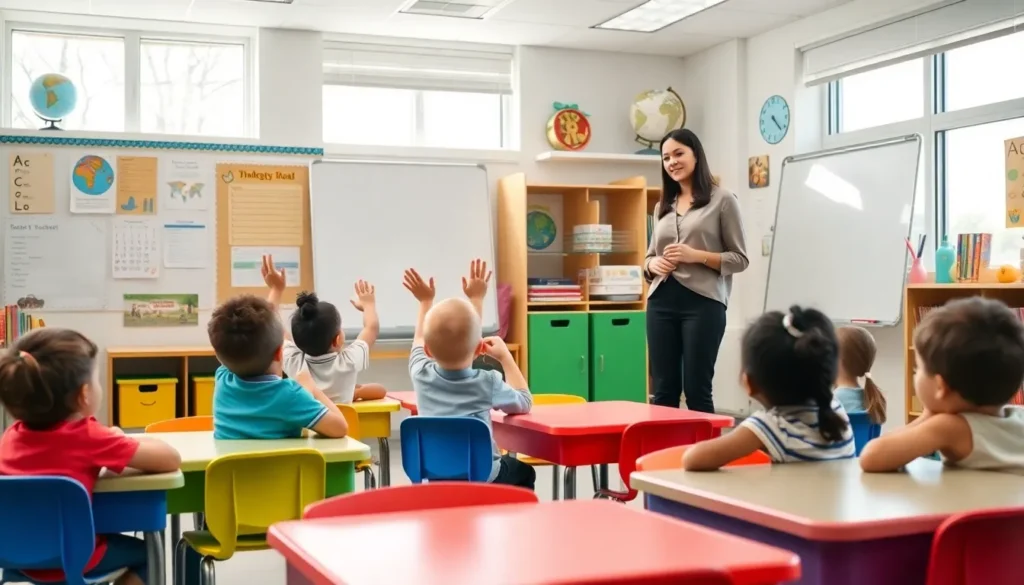
During elementary school, students learn in self-contained classrooms. One teacher usually instructs the same group of students across multiple subjects throughout the day. This setup helps young learners build strong relationships with their teacher and classmates.
Elementary school also introduces children to structured learning environments. Students follow daily schedules, complete assignments assignments, and participate in group activities. These experiences prepare them for the increased independence required in middle school and beyond.
The elementary school years are often called the “foundation years” for good reason. Research shows that academic performance in elementary school strongly predicts later educational outcomes. Children who struggle during this stage may face challenges in subsequent grades, making early intervention essential.
Key Subjects Taught in Elementary School
Elementary school curriculum focuses on building fundamental skills across several core subjects. These subjects form the academic foundation students need for more advanced learning.
Reading and Language Arts
Reading instruction dominates the early elementary school years. Students learn phonics, vocabulary, comprehension strategies, and fluency. By third grade, children typically transition from “learning to read” to “reading to learn.” Writing skills develop alongside reading, with students practicing handwriting, spelling, grammar, and composition.
Mathematics
Math instruction in elementary school covers number sense, basic operations, fractions, geometry, and measurement. Students learn to add, subtract, multiply, and divide. They also develop problem-solving skills through word problems and real-world applications.
Science
Science education introduces children to life science, earth science, and physical science concepts. Students learn about plants, animals, weather, and simple machines through hands-on experiments and observations. Elementary school science emphasizes curiosity and the scientific method.
Social Studies
Social studies teaches students about history, geography, civics, and economics. Children learn about their community, state, country, and the world. This subject helps students understand their place in society and develop civic awareness.
Additional Subjects
Most elementary schools also offer instruction in art, music, and physical education. Many schools include technology classes and foreign language programs. These subjects support well-rounded development and help children discover their interests and talents.
The Role of Teachers and Parents in Early Education
Teachers and parents both play critical roles in elementary school success. When these two groups work together, students benefit significantly.
The Teacher’s Role
Elementary school teachers do more than deliver lessons. They create safe learning environments, assess student progress, and address individual needs. A skilled teacher identifies struggling students early and provides targeted support.
Teachers also help children develop social-emotional skills. They teach conflict resolution, encourage teamwork, and model positive behavior. These lessons shape how students interact with others throughout their lives.
The Parent’s Role
Parents serve as a child’s first teachers. Their involvement in elementary school directly impacts academic achievement. Studies consistently show that children with engaged parents earn higher grades and demonstrate better behavior.
Parental involvement takes many forms. Reading with children at home builds literacy skills. Checking assignments teaches responsibility. Attending parent-teacher conferences keeps families informed about progress and challenges.
Building Strong Partnerships
The best outcomes occur when teachers and parents communicate regularly. Parents should feel comfortable reaching out to teachers with questions or concerns. Similarly, teachers should keep parents informed about classroom activities and student performance.
Many elementary schools offer volunteer opportunities, allowing parents to participate in school events and classroom activities. This involvement benefits not just individual children but the entire school community.
How to Help Your Child Succeed in Elementary School
Supporting a child through elementary school requires consistent effort and attention. These practical strategies can help parents set their children up for success.
Establish Routines
Children thrive with structure. Set consistent bedtimes, morning routines, and assignments schedules. Elementary school students need 9-12 hours of sleep each night, according to the American Academy of Pediatrics. A well-rested child learns better and behaves better.
Create a Learning Environment at Home
Designate a quiet space for assignments and reading. Stock it with supplies like pencils, paper, and age-appropriate books. Limit screen time during study hours. A distraction-free environment helps children focus on their work.
Read Together Daily
Reading remains the single most important activity parents can do with elementary school children. Read aloud to younger students and listen to older ones read. Discuss stories to build comprehension skills. Visit the library regularly to foster a love of books.
Stay Involved
Attend school events, volunteer when possible, and communicate with teachers. Review assignments assignments and report cards together. Ask specific questions about your child’s day: “What did you learn in math?” works better than “How was school?”
Encourage a Growth Mindset
Praise effort over results. When children struggle, remind them that challenges help brains grow. Avoid labeling kids as “smart” or “not good at math.” Instead, emphasize that skills improve with practice.
Address Problems Early
If your child struggles academically or socially, act quickly. Talk to teachers about concerns. Request evaluations if you suspect learning differences. Early intervention during elementary school can prevent larger problems later.


