
Table of Contents
ToggleElementary school techniques shape how children learn, grow, and build skills they’ll use for life. Teachers who apply proven methods create classrooms where students thrive academically and socially. Research shows that effective teaching strategies in early education lead to better outcomes in reading, math, and critical thinking.
This guide covers practical elementary school techniques that work. From active learning strategies to classroom management, these approaches help educators reach every student. Whether teaching a class of twenty or working one-on-one, these methods deliver results.
Key Takeaways
- Elementary school techniques like Think-Pair-Share and learning stations keep young students actively engaged while building confidence.
- Hands-on activities using math manipulatives and science experiments help children grasp abstract concepts and form stronger memories.
- Consistent routines and clear, positive expectations are essential classroom management techniques that save instructional time and reduce anxiety.
- Differentiated instruction through flexible grouping and tiered assignments allows teachers to meet each student at their individual level.
- Social-emotional development techniques, including morning meetings and conflict resolution skills, prepare students for success beyond academics.
- Effective elementary school techniques incorporate movement, multiple learning modalities, and positive reinforcement to reach every learner.
Active Learning Strategies for Young Students
Active learning puts students at the center of instruction. Instead of passive listening, children engage directly with content through discussion, problem-solving, and collaboration.
Think-Pair-Share
This elementary school technique works well across subjects. Teachers pose a question, give students time to think, then pair them to discuss answers. Finally, pairs share with the whole class. The method builds confidence and encourages participation from quieter students.
Learning Stations
Rotating stations keep young learners engaged. A typical setup might include:
- A reading corner with leveled books
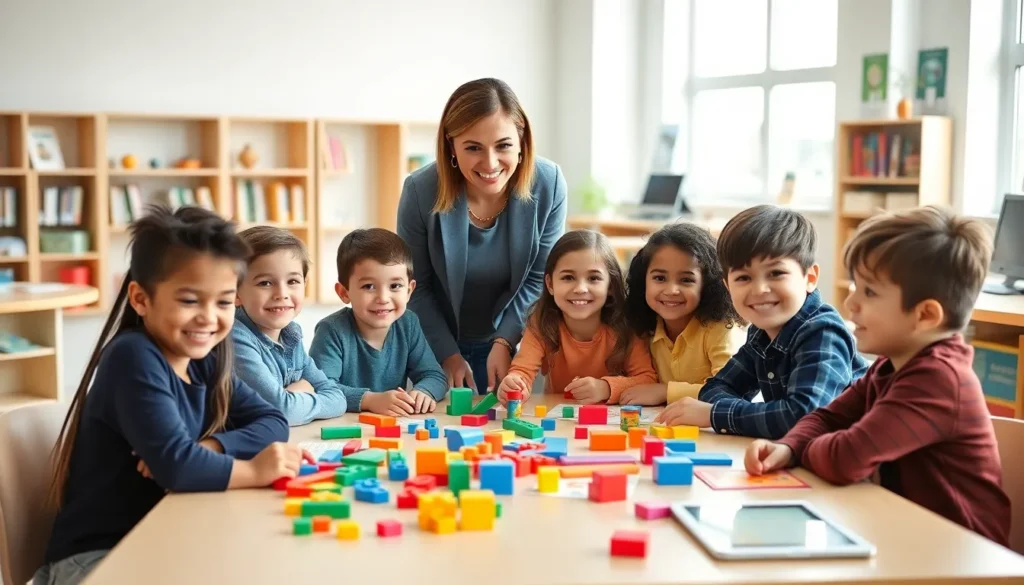
- A math manipulatives station
- A writing center with prompts
- A technology station for educational games
Students move through stations at set intervals. This structure breaks up the day and addresses different learning preferences.
Movement-Based Learning
Young children learn better when they move. Elementary school techniques that incorporate physical activity include acting out stories, using hand signals to show understanding, and playing educational games that require movement. A teacher might have students hop to different corners of the room to answer multiple-choice questions. This approach keeps energy levels manageable while reinforcing content.
Building Foundational Skills Through Hands-On Activities
Hands-on activities help elementary students grasp abstract concepts. When children touch, build, and create, they form stronger memories and deeper understanding.
Math Manipulatives
Base-ten blocks, fraction tiles, and counting cubes make numbers concrete. A student struggling with subtraction might finally “get it” when they physically remove blocks from a group. Elementary school techniques using manipulatives show measurable gains in math achievement, particularly for struggling learners.
Science Experiments
Simple experiments teach the scientific method while building curiosity. Growing plants, mixing safe household substances, or observing insects gives students direct experience with scientific concepts. The key is connecting experiments to clear learning objectives.
Art Integration
Art projects reinforce learning across subjects. Students might:
- Create timelines with drawings for history lessons
- Build models to demonstrate science concepts
- Design book covers after reading assignments
- Make maps for geography units
These elementary school techniques engage creative thinking while deepening content knowledge. Students who struggle with traditional assessments often excel in project-based work.
Classroom Management Techniques That Work
Good classroom management creates conditions for learning. Without it, even the best lesson plans fall flat.
Clear Expectations
Effective elementary school techniques start with explicit rules. Teachers should state expectations in positive terms, “Walk in the hallway” rather than “Don’t run.” Posting rules visibly and reviewing them regularly helps students remember.
Consistent Routines
Children thrive on predictability. Morning routines, transition procedures, and end-of-day rituals reduce anxiety and save instructional time. A well-practiced routine for moving from desks to the carpet might take 30 seconds. Without that routine, the same transition could eat up five minutes.
Positive Reinforcement
Catching students doing the right thing works better than constant correction. Elementary school techniques for positive reinforcement include:
- Verbal praise specific to the behavior
- Class reward systems
- Individual incentives
- Notes home to parents
The ratio matters. Research suggests teachers should aim for at least four positive interactions for every correction.
Proximity and Presence
Moving around the classroom prevents problems before they start. Standing near a distracted student often redirects them without disrupting the lesson. This simple elementary school technique reduces the need for verbal corrections.
Differentiated Instruction for Diverse Learners
Every classroom contains students with different abilities, backgrounds, and learning styles. Differentiated instruction meets each child where they are.
Flexible Grouping
Teachers can group students by skill level for some activities and mix abilities for others. A reading group might contain students at similar levels, while a science project group might pair stronger students with those who need support. Elementary school techniques using flexible grouping prevent tracking while addressing individual needs.
Tiered Assignments
The same core concept can be taught at different levels. A writing assignment might ask advanced students to compose a five-paragraph essay while others write a single detailed paragraph. Both groups practice the same skills at appropriate challenge levels.
Multiple Means of Expression
Students can show what they know in different ways. Options might include:
- Written reports
- Oral presentations
- Visual displays
- Digital projects
- Demonstrations
These elementary school techniques honor different strengths while maintaining high standards for all students.
Learning Style Considerations
Some students learn best by listening, others by seeing, and still others by doing. Effective lessons incorporate multiple modalities. A vocabulary lesson might include hearing the word, seeing it written, and using it in a sentence.
Encouraging Social and Emotional Development
Academic skills matter, but so does emotional intelligence. Elementary school techniques that address social-emotional learning prepare students for life beyond the classroom.
Morning Meetings
Starting the day with a class meeting builds community. Students might share news, practice greetings, or discuss feelings. This routine creates connection and sets a positive tone for learning.
Conflict Resolution Skills
Teaching students to solve their own disagreements pays dividends. Elementary school techniques for conflict resolution include:
- Using “I” statements
- Identifying feelings
- Brainstorming solutions
- Finding compromises
Role-playing common scenarios gives students practice before real conflicts arise.
Emotional Vocabulary
Children need words to express their feelings. Teachers can introduce feeling words through books, discussions, and charts. A student who can say “I feel frustrated” is less likely to act out.
Collaborative Learning
Group work teaches cooperation, communication, and compromise. Elementary school techniques using collaboration include partner reading, group projects, and peer editing. Students learn to value different perspectives and divide tasks fairly.


