
Table of Contents
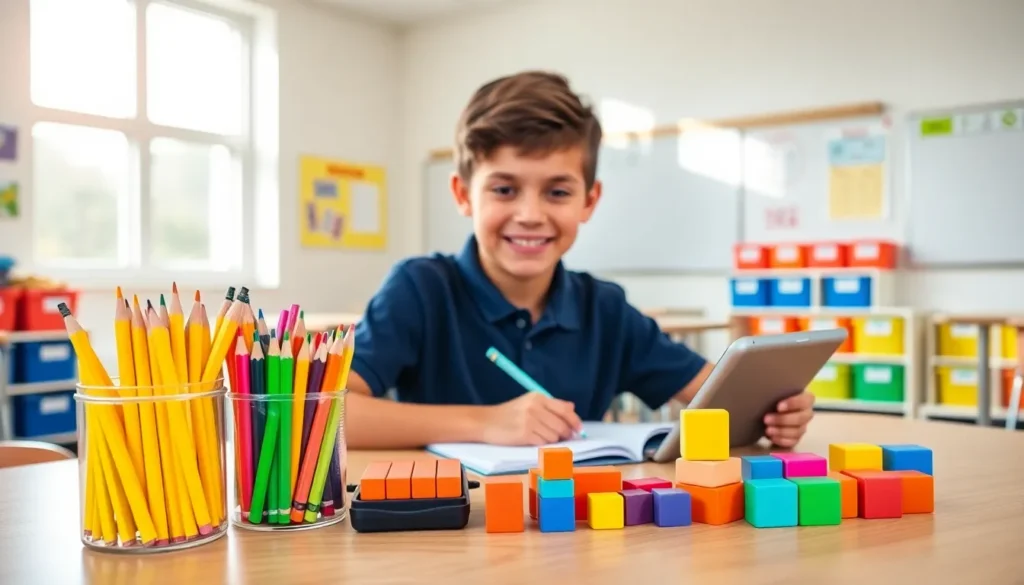
ToggleElementary school tools shape how children learn, create, and grow. The right supplies help students build foundational skills they’ll use for years. From pencils to tablets, these items support academic success and spark curiosity.
Parents and teachers know the challenge: finding supplies that work well and last. This guide covers the essential elementary school tools every young learner needs. Each category addresses specific learning areas, from writing basics to creative expression.
Key Takeaways
- Essential elementary school tools span five categories: writing supplies, math manipulatives, organization items, technology, and art materials.
- Pencils, crayons, and erasers form the foundation of daily learning, with larger sizes recommended for younger students developing fine motor skills.
- Math manipulatives like base-ten blocks and counting cubes help children understand abstract concepts through hands-on, visual learning.
- Technology tools such as tablets, educational apps, and headphones now supplement traditional elementary school tools in modern classrooms.
- Organization essentials like color-coded folders and pencil cases teach responsibility while keeping students prepared for each subject.
- Quality art supplies including safety scissors, washable paints, and glue sticks support creativity and fine motor development across multiple subjects.
Writing and Drawing Supplies
Writing and drawing supplies form the foundation of early education. Students use these elementary school tools daily across multiple subjects.
Pencils and Erasers
Wooden pencils remain the top choice for young learners. The #2 pencil offers the ideal balance of darkness and erasability. Many teachers prefer larger diameter pencils for kindergarteners since small hands grip them more easily.
Quality erasers matter just as much. Pink rubber erasers work well, but kneaded erasers offer precision for older students. A good eraser removes marks cleanly without tearing paper.
Crayons and Colored Pencils
Crayons introduce children to color theory and creative expression. Standard 24-count boxes cover most classroom needs. Jumbo crayons suit younger students who haven’t developed fine motor control.
Colored pencils offer more detail for drawing projects. They blend better than crayons and create sharper lines. Most elementary classrooms use both, switching based on the activity.
Pens and Markers
Students typically transition to pens around third or fourth grade. Ballpoint pens with erasable ink reduce anxiety about mistakes. Washable markers serve younger grades for art projects and poster work.
Fine-tip markers help with detailed coloring and lettering. Dry-erase markers have become standard elementary school tools for individual whiteboards during math and spelling practice.
Math and Measurement Tools
Math and measurement tools turn abstract concepts into hands-on learning. These elementary school tools make numbers feel real and accessible.
Rulers and Measuring Tapes
Every student needs a 12-inch ruler with both inch and centimeter markings. Clear plastic rulers let students see their work underneath. Wooden rulers last longer and resist breaking when dropped.
Flexible measuring tapes help with science projects and real-world math problems. Students measure objects that rulers can’t handle, like curved surfaces or distances across the room.
Counting Manipulatives
Base-ten blocks teach place value visually. Students physically group ones into tens and tens into hundreds. This concrete approach builds number sense faster than worksheets alone.
Counting cubes, pattern blocks, and fraction tiles serve similar purposes. Teachers rotate through different elementary school tools based on the lesson. Each manipulative addresses specific math concepts.
Basic Calculators
Calculators enter the classroom around third grade. Basic four-function models teach students to verify their mental math. They also introduce calculator literacy, a skill students will need later.
Teachers use calculators strategically. Students still learn computation by hand, but calculators help check work and solve multi-step problems without getting bogged down in arithmetic.
Organization and Storage Essentials
Organization and storage essentials keep learning materials accessible and classrooms tidy. These elementary school tools teach responsibility while supporting daily routines.
Folders and Binders
Two-pocket folders organize worksheets by subject. Color-coding helps young students find materials quickly, blue for math, red for reading, and so on. Durable plastic folders outlast paper versions by months.
Binders work better for older elementary students. They hold more papers and include sections for different subjects. Three-ring binders with 1-inch spines suit most fourth and fifth graders.
Pencil Cases and Supply Boxes
Pencil cases keep writing tools together and reduce desk clutter. Zippered pouches fit inside backpacks easily. Hard-sided supply boxes protect crayons and markers from breaking.
Clear containers let teachers quickly check that students have necessary supplies. Many classrooms require specific elementary school tools, so visibility helps everyone stay prepared.
Backpacks and Lunchboxes
A good backpack distributes weight across both shoulders. Padded straps and back panels add comfort for students walking to school. Multiple compartments separate books, supplies, and personal items.
Insulated lunchboxes keep food fresh until midday. Easy-open latches matter for younger children who struggle with zippers and clips.
Technology Tools in the Modern Classroom
Technology tools have transformed how elementary students learn. These digital elementary school tools supplement traditional materials rather than replace them.
Tablets and Laptops
Many schools now issue tablets or Chromebooks to students. These devices run educational apps, provide internet access, and support digital assignments. Touchscreens work well for younger students still developing typing skills.
Protective cases prevent damage from drops and spills. Styluses help with handwriting practice on screens. Most schools require these elementary school tools to stay at school, though some programs allow home use.
Educational Apps and Software
Math apps like Prodigy and IXL provide personalized practice. Reading programs track comprehension and adjust difficulty levels. Typing tutors build keyboard skills gradually.
Teachers assign specific apps for assignments and classroom activities. Parents can often access progress reports through these platforms. The best educational software feels like play while building real skills.
Headphones
Headphones have become essential elementary school tools. Students wear them during computer time, listening activities, and independent learning stations. Over-ear designs block classroom noise effectively.
Schools often request that families provide personal headphones for hygiene reasons. Budget-friendly wired options work perfectly for most educational uses.
Art and Creative Supplies
Art and creative supplies encourage self-expression and develop fine motor skills. These elementary school tools support learning across subjects, not just art class.
Paints and Brushes
Washable tempera paints dominate elementary art rooms. They clean up easily and come in vibrant colors. Watercolor sets offer a different experience with lighter, transparent effects.
Brush variety matters for different techniques. Flat brushes cover large areas quickly. Round brushes create details and lines. Foam brushes work well for very young students learning brush control.
Scissors and Glue
Safety scissors with blunted tips suit younger students. Pointed scissors come later, around second or third grade. Left-handed scissors matter, using right-handed versions frustrates left-handed students.
Glue sticks provide mess-free adhesion for most paper projects. White school glue works better for heavier materials. Glue dots and tape dispensers round out the adhesive options in most classrooms.
Construction Paper and Craft Materials
Construction paper comes in dozens of colors. Students cut, fold, and layer it for countless projects. Heavier cardstock handles paint and markers without bleeding through.
Pipe cleaners, pom-poms, googly eyes, and felt pieces fill craft bins. These elementary school tools transform simple projects into three-dimensional creations. Teachers appreciate supplies that inspire without creating excessive mess.


